


Algarve
- Nicholas Turner
- Feb 20, 2020
- 3 min read

Updated: Feb 3, 2025
12th - 18th February 2020

In view of the poor weather in the UK as a consequence of Storm Dennis, we decided to take a short and hastily arranged break in the Algarve. We used Faro as our base staying in a delightful hotel overlooking the harbour. Since this was our first trip to the Algarve, and not really knowing where the hotspots were, we pretty much followed the excellent 'birdwatching guide to the algarve' which is available to download as a pdf (http://www.cyclingwalkingalgarve.pt). During the six days we worked our way around the main sites highlighted in this guide which gives excellent advice regarding where to park etc. and what you might see. The weather was exceptional all six days, typically around 20oC and sunny with light winds.
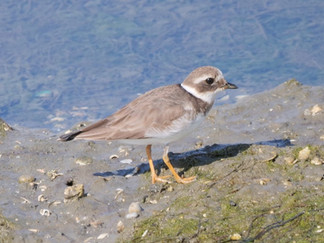
Thursday 13th February: There are many companies that offer boat trips around the extensive lagoons of Faro known as Ria Formosa. Depending on the tide it is possible to see quite a range of different waders and sea birds and in some cases get fairly close to allow photographs to be taken. We saw Spoonbill, Whimbrel, Kentish Plover, Ringed Plover, Little Egret, Caspian Tern, Dunlin, Grey Plover, Great Cormorant, Oystercatcher, Mediterranean Gull, Sandwich Tern and Lesser Black-backed Gull.



White Storks nest on top of the houses in an around Faro. It is also possible to walk westwards along the harbour by the railway line where there is an area of scrub together with salt pans that contain more birds such as Black-winged Stilt, Crested Lark, Stonechat and Chiffchaff.


Friday 14th February: Fonte da Benemola is about a 1 hour drive north of Faro and turned out to be a great place to see butterflies and flowers as well as birds. We walked for about four hours following the river and upon onto the top which is a mixture of scrubland and also areas that were formerly farmland including almond orchards. Butterflies included Spanish Festoon, Green Hairstreak (which were the most plentiful), Speckled Wood, Small Heath, Large White, Holly Blue and Brimstone. Amongst the flowers the Friar's Cowl and Paperwhite Narcissus were particularly attractive. Blue Rock Thrush also occurs here.


Back at Faro a late afternoon walk along the waterfront produced a nice selection of the local shorebirds including Black-winged Stilt and Greater Flamingo as well as some Serins and a Hoopoe.


Saturday 15th February: On day 3 we headed west for our longest trip taking in firstly Ria de Alvor where there is an impressive boardwalk that allow you to walk across the lagoons and by the beach. Here we saw Corn Buntings, Linnets and Little Stints.
The Sagres Peninsular is the most south-westerly part of Europe and is excellent for flowers and coastal birds. Here we saw Gannets, Black Redstart, Stonechat, Sardinian Warbler and Kestrel as well as some really exquisite flowers. On the drive back to Faro we saw a Black-shouldered Kite by the side of the A22 motorway.


Sunday 16th February: Castro Marim and Sapal de-Venta Moinhois are two sites east of Faro on the Spanish border. Castro Marim is an extensive lagoon area with large numbers of Gulls and Flamingos together with Corn Buntings. We were also lucky enough to see a single Cattle Egret here. Personally I found Sapal de-Venta Moinhois more interesting with a greater diversity of habitat and hence more species of birds. We had good views of a Short-toed Eagle and brief sightings of a Southern Grey Shrike. Also Common Buzzard, Marsh Harrier, Red-legged Partridge and Zitting Cisticola and several Black-winged Stilts.


Monday 17th February: In the morning a search of the scrub area near our hotel in Faro produced a Wryneck as well as the usual birds. In the afternoon we took another boat trip from Faro, this time a 3 hour excursion out to the edge of the lagoon where it meets the sea. This turned out to be a good place to see Mediterranean Gulls and also Bar-tailed Godwits.


Tuesday 18th February: The final day was spent at the Ludo Nature Park which is a wonderful area just to the west of faro near the airport. Here we saw several Hoopoes and Azure-winged Magpies, the latter proving very difficult to photograph. Also a Water Rail that came out of the reeds long enough to have its picture taken and a Little Grebe in summer plumage. Plus Spoonbill, Greater Flamingo, Whimbrel and Black-winged Stilt as always together with Greenshank, Common Redshank, Dunlin, Turnstone, Ringed Plover and a Black-shouldered Kite.


Comments